

Blog
From Sri Pada to Your Bathroom: The Physics of Echo & Reverberation


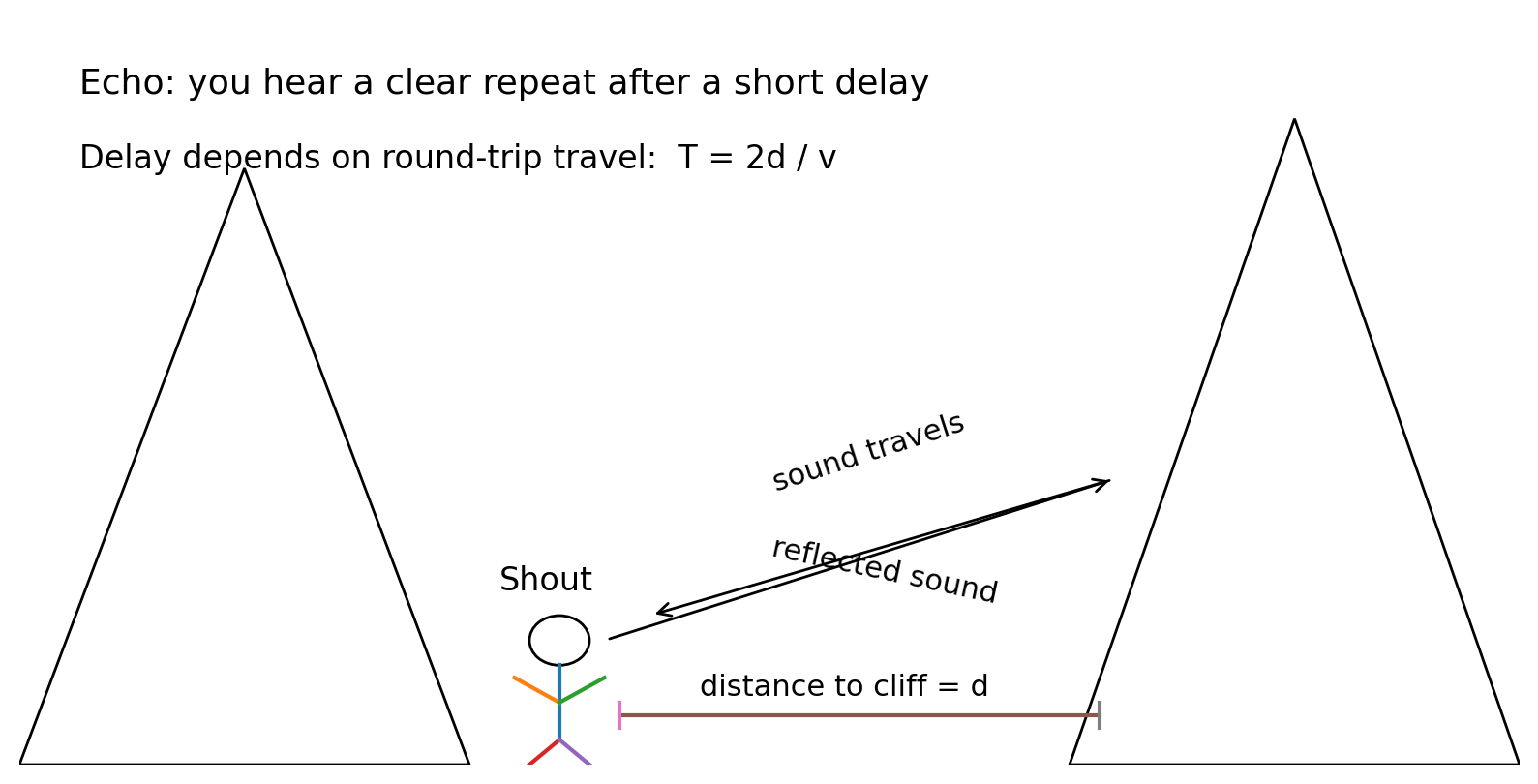
Have you ever made a pilgrimage to Sri Pada (Adam’s Peak)? If you choose to climb via the Palabaddala Route (Ratnapura) path, you will rendezvous at Lihini Hela (Lihini Cliff). Almost everyone taking that route pauses for a moment there and shouts out “Lihini Akke!” at their loudest voice. And—like the mountain is replying—there’s an answer in a second, repeating the same yell. That’s a natural phenomenon: sound reflecting from a distant rock face across the valley, creating a clear echo. Sometimes you’ll hear it repeat a few times from a single shout.
But here’s the fun part: although we casually call all of it “echo,” the sound you hear in an auditorium (or even your bathroom) is often a completely different effect. Let’s probe it out.
Echo: nature’s “call and response”
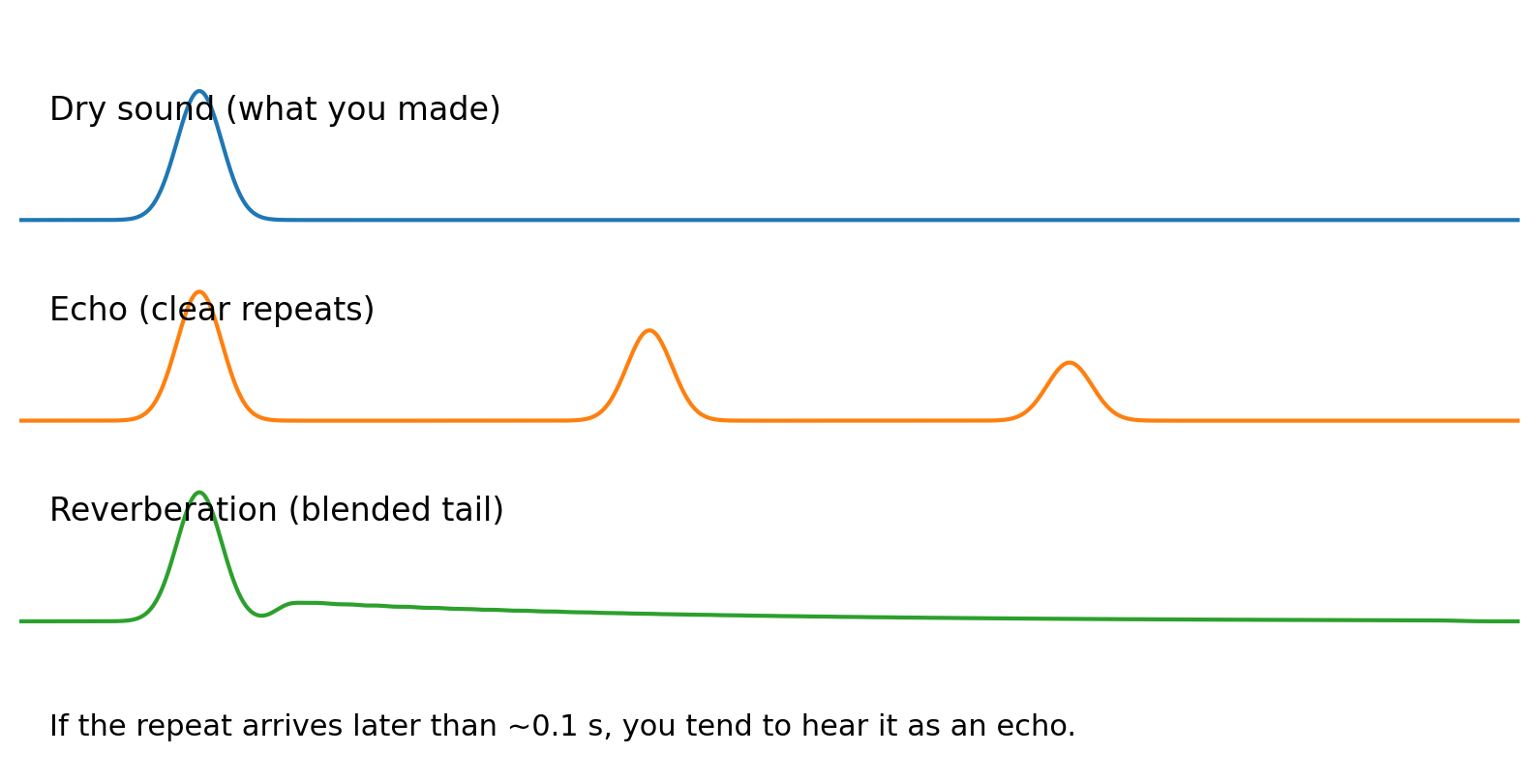
Sound travels as a wave through air. When that wave hits a large, hard surface—like a cliff or the far side of a valley—part of it bounces back. If the bounced sound returns with a noticeable delay, you hear your original shout again as a separate repeat. That’s an echo.
A simple idea explains why valleys give such clean replies:
- In open places, the reflecting surface is far away, so the returning sound arrives late enough for your brain to separate it from the original.
- Echoes can even repeat multiple times if the sound keeps bouncing between big surfaces.
A handy rule of thumb: if the repeat arrives later than about 0.1 seconds, we tend to hear it as a distinct echo rather than a blur.
Reverberation: when a room “keeps the sound alive”
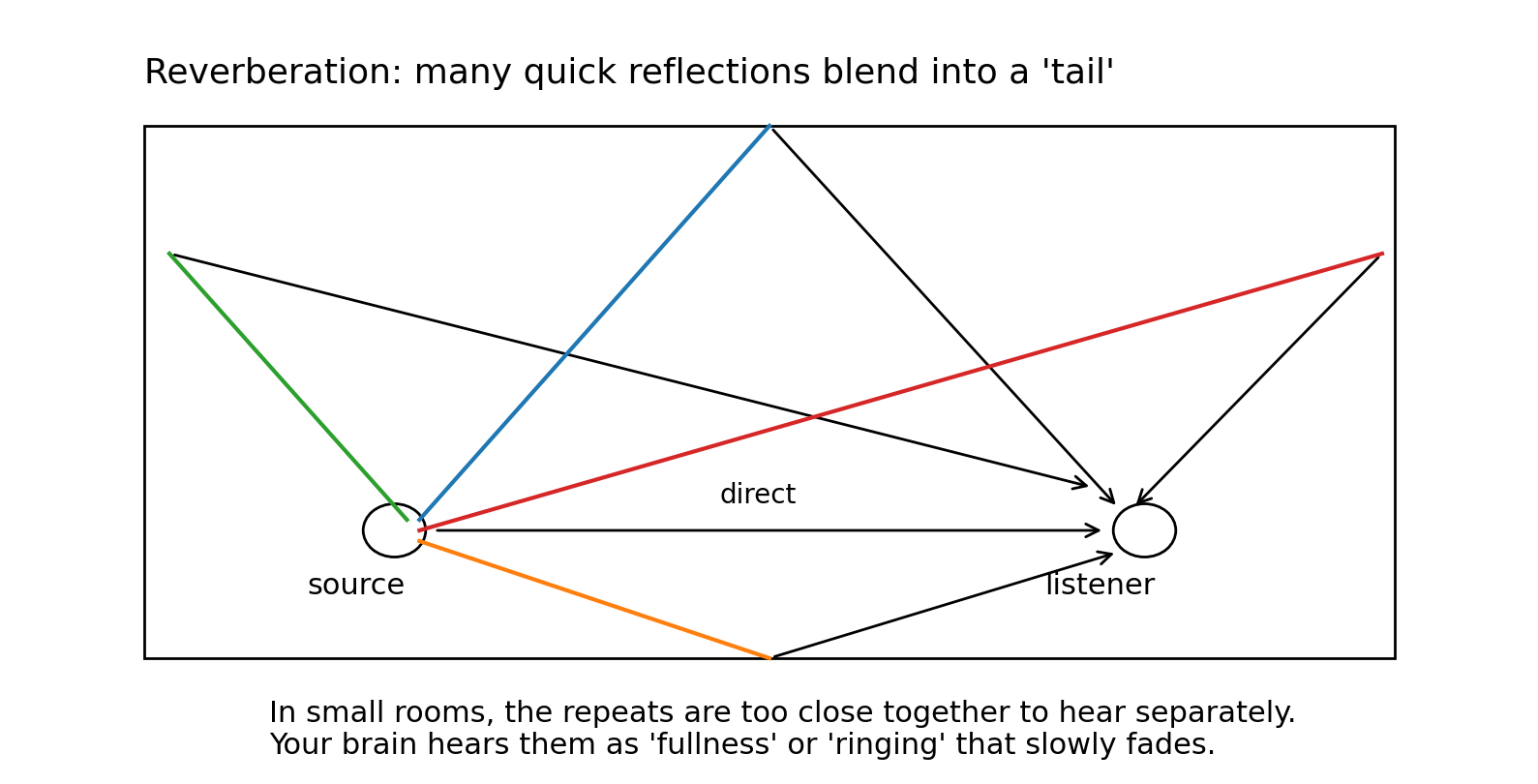
Reverberation is not a clean, separate repeat. It’s the persistence of sound after the original sound has stopped, caused by many reflections from nearby walls, ceilings, and floors.
In a room, sound doesn’t just go straight to your ears. It also bounces around and returns in tiny fragments—milliseconds apart—so they blend together. What you hear is a smooth “tail” that slowly fades: a bit of ringing, fullness, or sometimes muddiness.
That’s why:
An empty hall/classroom can feel loud but unclear.
A tiled bathroom can make one clap sound like a short, bright “shhhh…” that hangs in the air.
Why auditoriums don’t sound like bathrooms
Great auditoriums are engineered, not accidental. The “best” sound depends on what the space is for:
Speech (lectures, drama): you want clarity—so reverberation must be controlled.
Music (symphony, choir): a little reverberation can add warmth and richness.
That’s why acoustics teams often design halls differently for music vs speech, and consult sound experts to get it right.
Why auditoriums don’t sound like bathrooms
Great auditoriums are engineered, not accidental. The “best” sound depends on what the space is for:
Speech (lectures, drama): you want clarity—so reverberation must be controlled.
Music (symphony, choir): a little reverberation can add warmth and richness.
That’s why acoustics teams often design halls differently for music vs speech, and consult sound experts to get it right.
How designers control reverberation
Across the world, common strategies include absorbing and scattering reflections using smart materials and shapes, such as:
Curtains, carpets, upholstered seats, acoustic panels (absorb sound)
Irregular surfaces to scatter reflections (so there’s no harsh “bounce”)
Perforated panels backed with soft material like foam or wool (a classic acoustic trick)
Panel materials can include mineral wool, fiberglass, polyester fiber, foam—plus eco options like cork, felt, and even coconut coir fiber.
Tiny “numbers corner” (optional, not scary)
If you like quick calculations:
Echo delay depends on the round trip (to the wall and back):
T = 2d / v, where v ≈ 343 m/s (speed of sound in air).Reverberation is often described by RT60: the time for sound level to drop by 60 dB. A classic estimate is Sabine’s formula:
RT60 = 0.161 V / A.
Try it yourself (30 seconds)
Clap once in a bathroom. Hear the short “tail.”
Hang a thick towel or open a curtain and clap again—notice how the tail shortens.
Outdoors, try a shout near a large wall or open valley—notice how distance changes what you hear.
Next time you hear “Lihini Akke” answered on Sri Pada, you’ll know you’re hearing physics in the wild: a strong reflection over a long distance. And when an auditorium makes music feel magical, that’s physics too—carefully guided.
( Contributors: Dr. R Chinthaka L De Silva, Ms. D A D I Sewwandi, Ms. J A C P Jayasinghe, Ms. M I Mallikaratchy @ Industrial Technology Institute, Colombo-7)